Species profile
Idiocnemis bidentata
Selys, 1878
Taxonomic path
SuborderZygoptera
FamilyPlatycnemididae
GenusIdiocnemis
LCLeast Concern
EndemicSouthwest Papua (Vogelkop, Waigeo, Batanta, Salawati)
Last updated: 02 July 2026
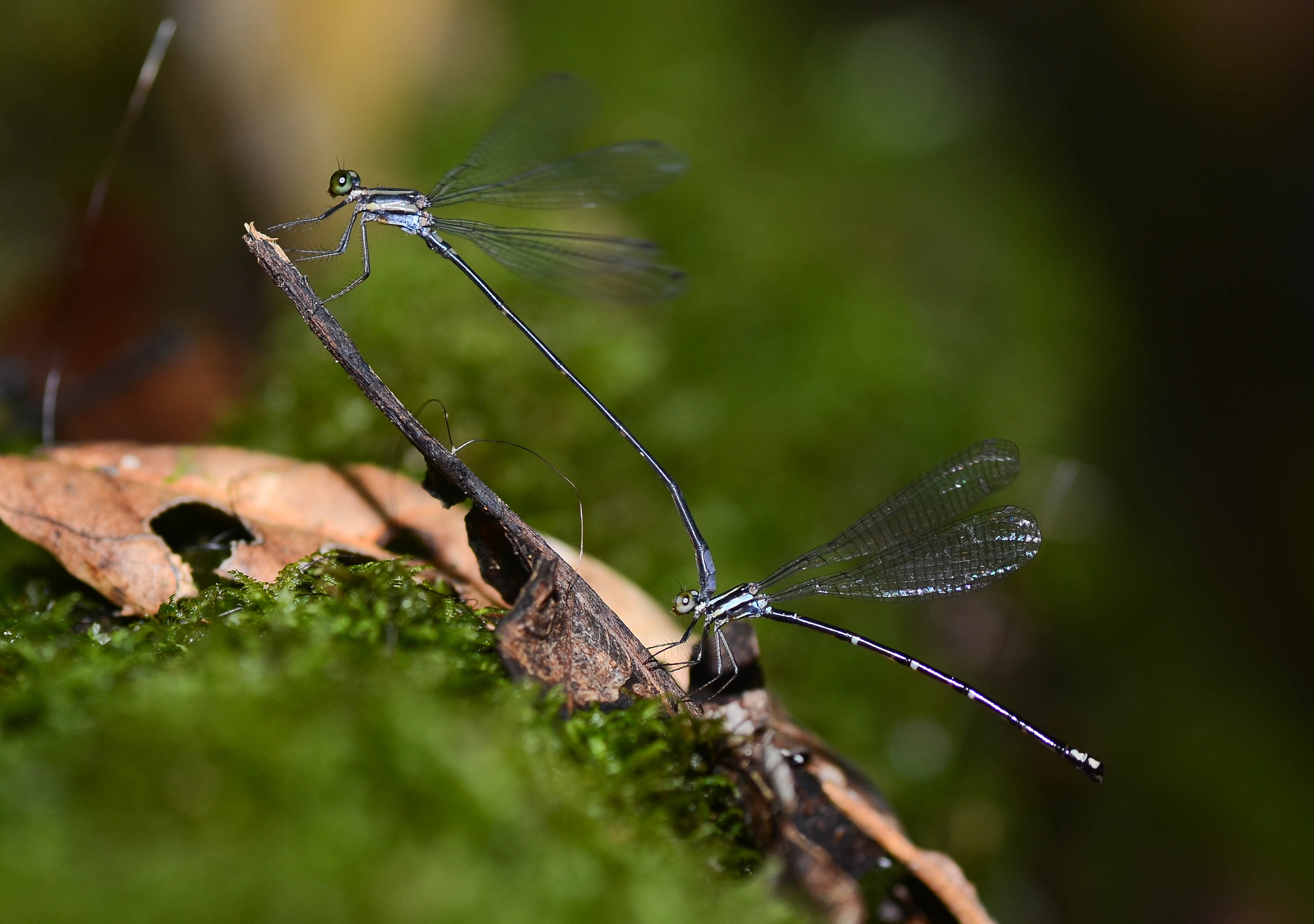
tandem position
© Raja Rhamdany H (2025)
Source: Personal Collection·License: All rights reserved
Diagnosis
A medium-sized dark-colored damselfly with brown to black body coloration and distinct purple or bluish markings. Head characterized by a large subquadrangular black marking surrounding the ocelli and extending toward the eye margins, forming one of the most recognizable external features of the species. Thorax with complete antehumeral stripes, approximately half as wide as the black carinal stripe, and lacking pruinescence on the prothorax, synthorax, and anterior abdomen. Wings hyaline with dark pterostigma, while the abdomen is slender and predominantly blackish-brown with faint purple markings on posterior segments.
The species is especially distinguished by the male anal appendages: the superior appendage bears a distinct subtriangular basal projection and a uniquely notched distal process, which represents the primary diagnostic character of the species. This combination of a large ocellar marking, complete antehumeral stripes, absence of pruinescence, and the characteristic notched superior appendages clearly separates Idiocnemis bidentata from other members of the genus.
Morphological Characters
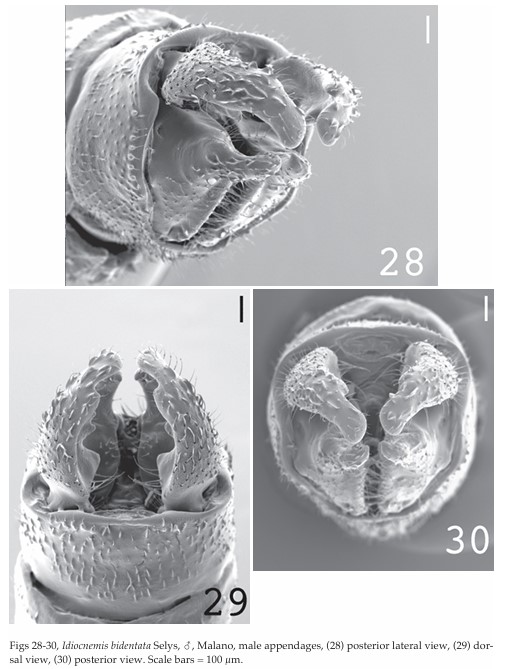
appendage detail
© Dirk Gassmann (2000)
1 / 2
Locality
Distribution
Western and eastern part of Bird’s Head Peninsula (Vogelkop) and
the West Papuan islands Waigeo, Batanta (first record) and Salawati.
Ecology
Habitat
No details are known on habitat and ecology; probably small running waters.
Remarks
Notes
Additional notes will be added in future revisions.
Literature
References
1 references- 1
Gassmann, D. (2000). Revision of the Papuan Idiocnemis bidentata-group (Odonata: Platycnemididae). Zoologische Mededelingen, 74, 18-24, 375–402.