Species profile

Protosticta gracilis

Kirby, 1889

Taxonomic path

SuborderZygoptera

FamilyPlatystictidae

GenusProtosticta

CRCritically Endangered
EndemicManado

Last updated: 05 July 2026

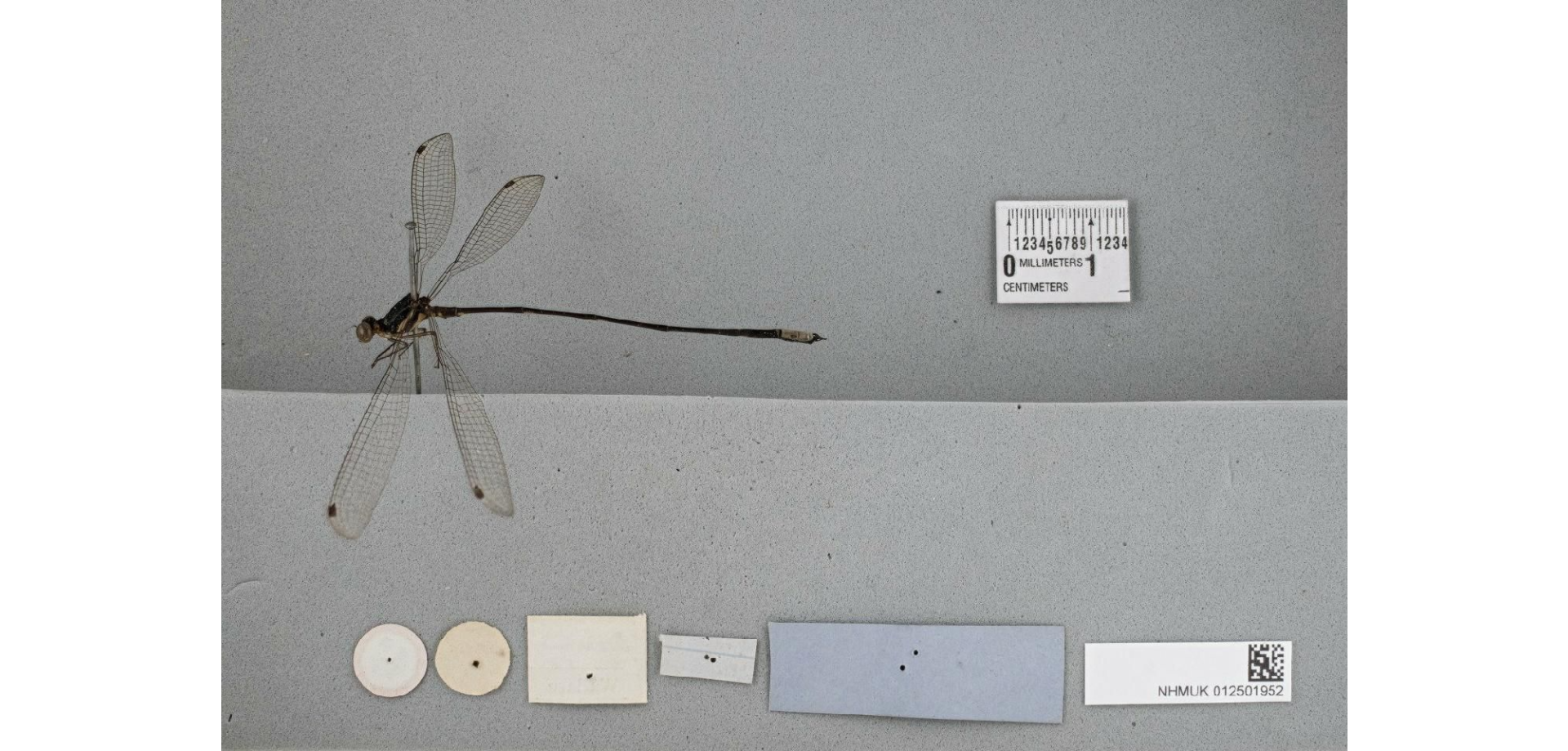
Protosticta gracilis
Holotype
© Natural History Museum Collection Specimens
1 / 2

Diagnosis

A medium-sized to relatively large Protosticta with a long, slender abdomen that becomes slightly broader toward the terminal segments. The head is mostly dark brown to black, with a pale yellowish labrum and pale anteclypeus. The thorax is bronzy to dark brown, greenish above in life, without a distinct antehumeral stripe. A pale oblique stripe is present on the metepisternum, while the lower side of the thorax and legs are yellowish to pale brown. The wings are hyaline with dark venation. The pterostigma is large, oblong, and covers about two cells. Kirby recorded 21–22 postnodal crossveins in the forewings and about 18 in the hindwings. Van Tol noted that the arculus is positioned distal to Ax2 and that R4+5 originates just before the subnodus. The abdomen is dark bronzy to brownish black, with pale yellow markings on the basal portions of the anterior abdominal segments. The terminal segments are paler, and the dorsum of abdominal segment 10 is distinctly blue. This blue coloration places P. gracilis within the gracilis-group of Sulawesi Protosticta. The male anal appendages are the most important diagnostic feature. The superior appendages are curved inward and possess a dorsal tooth in the basal half. The inferior appendages are shorter but bear an exceptionally large, sharp inner tooth directed obliquely toward the apex. In dorsal view, the tip of this tooth nearly reaches the visible base of the appendages. This large inner tooth clearly separates P. gracilis from the similar P. coomansi, in which the tooth is much smaller. Only the male is known.

Morphological Characters

Anal Appendage
1 / 1

Locality

Distribution

North Sulawesi

Ecology

Habitat

The species was originally collected at a waterfall opening onto a lake, and if further populations are found, it is likely to occur in seepages and brooks in the forest also.

Remarks

Notes

The last assessment was conducted 19 years ago, on 4 June 2007, by The IUCN Red List of Threatened Species.

Literature

References

4 references
  1. 1

    Van Tol, J. (2000). The Odonata of Sulawesi and Adjacent Islands. Part 5. the Genus Protosticta Selys (Platystictidae). Tijdschrift voor Entomologie, 143(1-2), 221-266.

  2. 2

    Kirby, W.F., (1889). Descriptions of new genera and species in the collection of the British Museum, chiefly from Africa. – Proceedings of the Zoological Society of London 1889: 297-303.

  3. 3

    Kalkman, V. (2009). Protosticta gracilis. The IUCN Red List of Threatened Species 2009: e.T163937A5670011. https://dx.doi.org/10.2305/IUCN.UK.2009-2.RLTS.T163937A5670011.en.

  4. 4

    Natural History Museum (2014). Collection specimens [Data set]. Natural History Museum.