Species profile
Drepanosticta obiensis
van Tol, 2007
Taxonomic path
SuborderZygoptera
FamilyPlatystictidae
GenusDrepanosticta
DDData Deficient
EndemicObi Island
Last updated: 09 July 2026
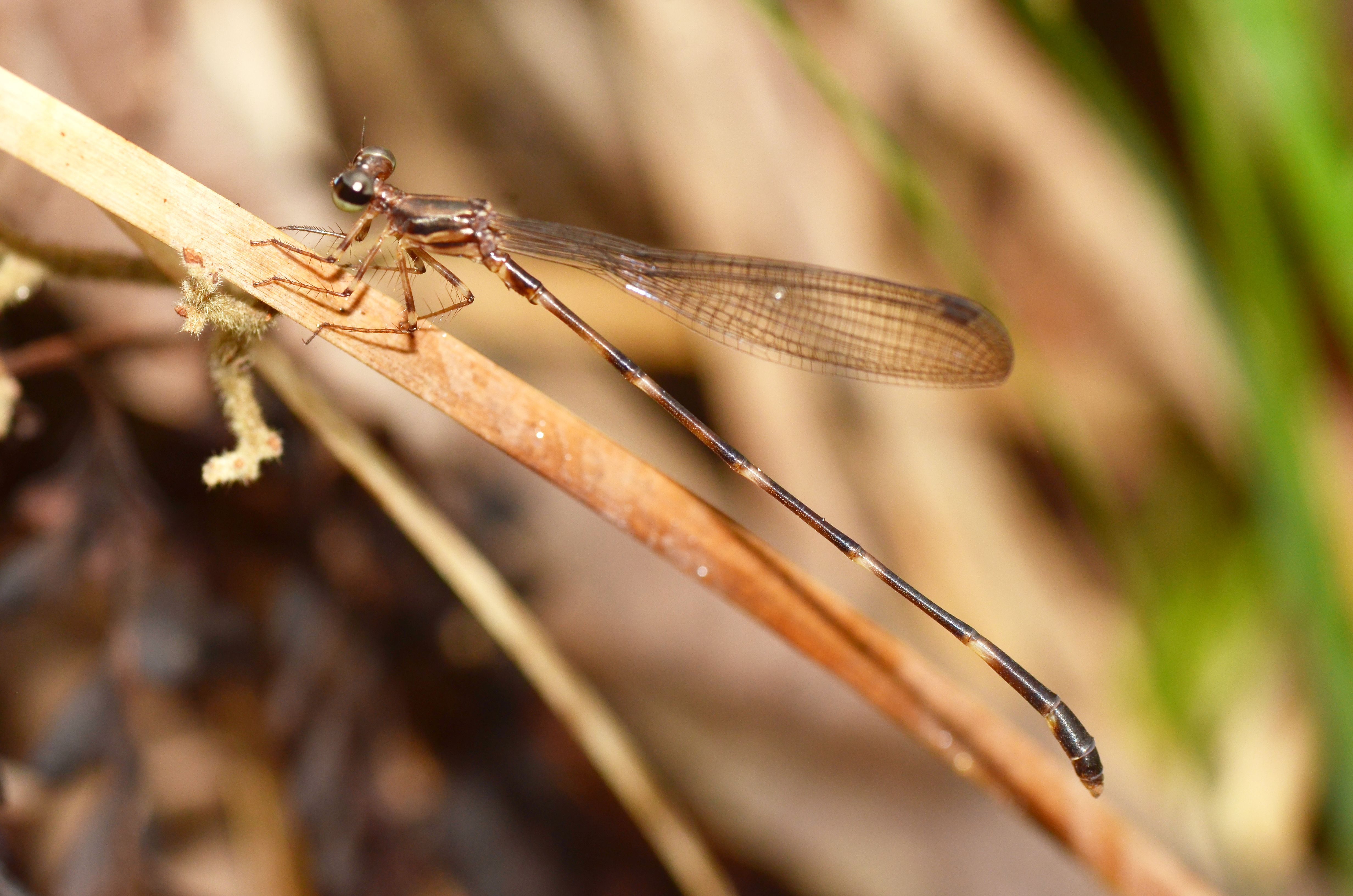
Male
© Raja Rhamdany H (2023)
Source: Personal Collection·License: All rights reserved
Diagnosis
Male : Medium-sized Drepanosticta with a predominantly brown colour pattern. Head with bluish-white labrum and mandibles; the anterior two-fifths of the labrum dark brown. The remaining parts of the head are mostly brownish black.
The prothorax is similar to D. moluccana, with no major structural differences. Synthorax brown with distinctly visible pale stripes; compared with D. moluccana, the pale synthoracic markings are more conspicuous. The darker stripe over the metapleural suture is narrower, and the anterior and posterior parts are paler.
Legs are dirty yellow with darker rings. Wings are hyaline with brown venation and brown pterostigma.
The abdomen is predominantly brown, with segments 8–10 dark brownish black. Segment 2 has a triangular dark marking, while segments 3–7 have pale basal markings. Male anal appendages are diagnostic: the superior appendages are shorter and more slender than in D. moluccana, with the medio-dorsal tooth more distinct and sharper; the inferior appendages are also more slender.
Female : Similar to the male but generally paler. The valves and terminal appendages are brownish black and approximately as long as the anal appendages.
Morphological Characters
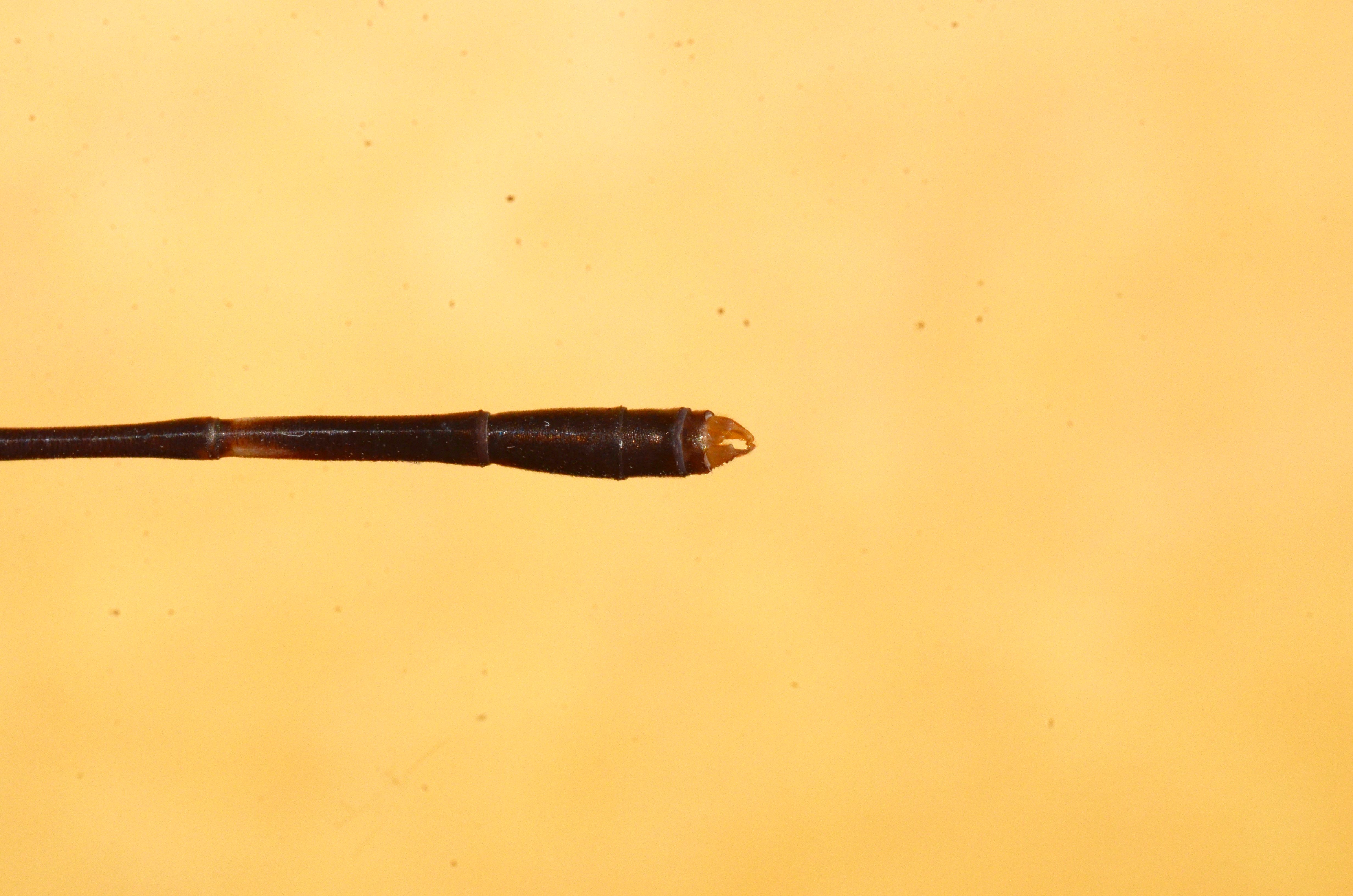
Male anal appendage in dorsal view
© Raja Rhamdany H (2024)
1 / 2
Locality
Distribution
Endemic to Obi Island, North Maluku, Indonesia. Known from several localities on Obi.
Ecology
Habitat
Van Tol (2007) recorded this species from Obi Island at approximately 350–600 m a.s.l., but provided no detailed habitat description. Harahap & Shahroni (2024) later reported the species from western Obi Island in two habitat types: a moderately open habitat at around 70 m a.s.l. with stagnant water, herbaceous vegetation, shrubs, scattered Hopea sp. trees, and vegetation dominated by Thelypteris angustibasis; and a lowland tropical forest at around 200 m a.s.l., where individuals were observed along a narrow stream under closed canopy. These observations indicate that the species can occur in both semi-open wet habitats and shaded forest streams.
Remarks
Notes
Belongs to the Drepanosticta moluccana species-group. It is structurally similar to D. moluccana from Buru but differs by:
• more distinct pale synthoracic stripes,
• narrower dark metapleural stripe,
• more slender superior and inferior anal appendages,
• sharper medio-dorsal tooth on the superior appendages.
The species name obiensis refers to Obi Island, the type locality.
Literature
References
2 references- 1
van Tol, J. (2007), The Platystictidae of the Moluccas and Misool (Odonata). Dtsch. Entomol. Z., 54: 3-26.
- 2
Harahap, R. R., & Shahroni, A. M. (2024). RECORD OF TWO ENDEMIC DAMSELFLIES FROM OBI ISLAND, MOLUCCAS, INDONESIA WITH HABITAT DESCRIPTION. Treubia, 51(2), 169–174.