Species profile
Diplacina militaris
Ris, 1909
Taxonomic path
SuborderAnisoptera
FamilyLibellulidae
GenusDiplacina
LCLeast Concern
EndemicSulawesi
Last updated: 01 July 2026

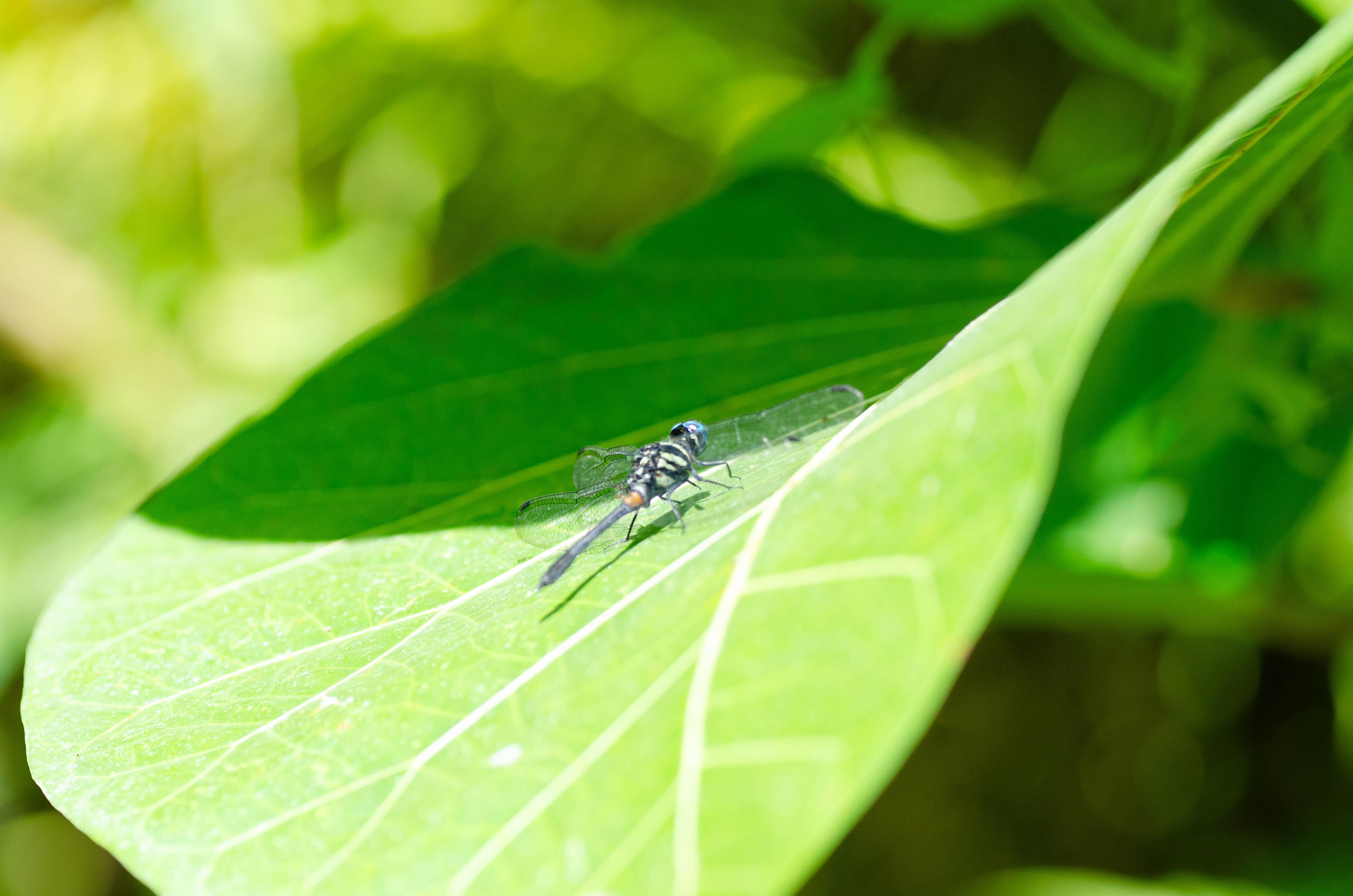
Basking on a leaf by the riverbank
© Raja Rhamdany H (2024)
Source: Raja Rhamdany H (2024)·License: All rights reserved
Diagnosis
A medium-sized black-and-yellow libellulid with a slender abdomen and broad pale markings on the thorax. The frons bears a conspicuous pale transverse band, while the thorax has a broad antehumeral stripe and extensive pale lateral bands. Abdominal segments 1–3 are partly pale, whereas segments 4–10 are predominantly black.
The male has long, slender superior anal appendages with outward-curved tips and several short ventral teeth. The inferior appendage is short and bifid at the apex. Females are more robust and show broader yellow markings along the sides of abdominal segments 3–8.
Two subspecies are recognised: D. m. militaris, occurring across much of central, southern, and southwestern Sulawesi and on Peleng Island; and D. m. dumogae, known mainly from northern Sulawesi, including Dumoga-Bone National Park.
Morphological Characters

1 / 1
Taxonomy
Subspecies
Subspecies names linked to this species are shown as supporting taxonomic information.
- Diplacina militaris dumogae
- Diplacina militaris militaris
Locality
Distribution
Diplacina militaris is widespread in Sulawesi, occurring from the southwest to the northern peninsula, with additional records from Peleng Island. It has not been recorded from the southeastern peninsula. The nominate subspecies occurs mainly in central, southern, and southwestern Sulawesi, while D. m. dumogae is known from the northern peninsula.
Ecology
Habitat
Diplacina militari inhabits rivers and streams from approximately 200 to 1,000 m elevation, and may also occur in partially cultivated landscapes. Males are typically observed near the water, often perching and basking on exposed boulders. Although generally wary, they appear less difficult to approach under overcast conditions. Current observations suggest that the species is not strictly dependent on intact forest and can persist in habitats experiencing moderate disturbance.
Remarks
Notes
Additional notes will be added in future revisions.
Literature
References
References will be added in future revisions.